
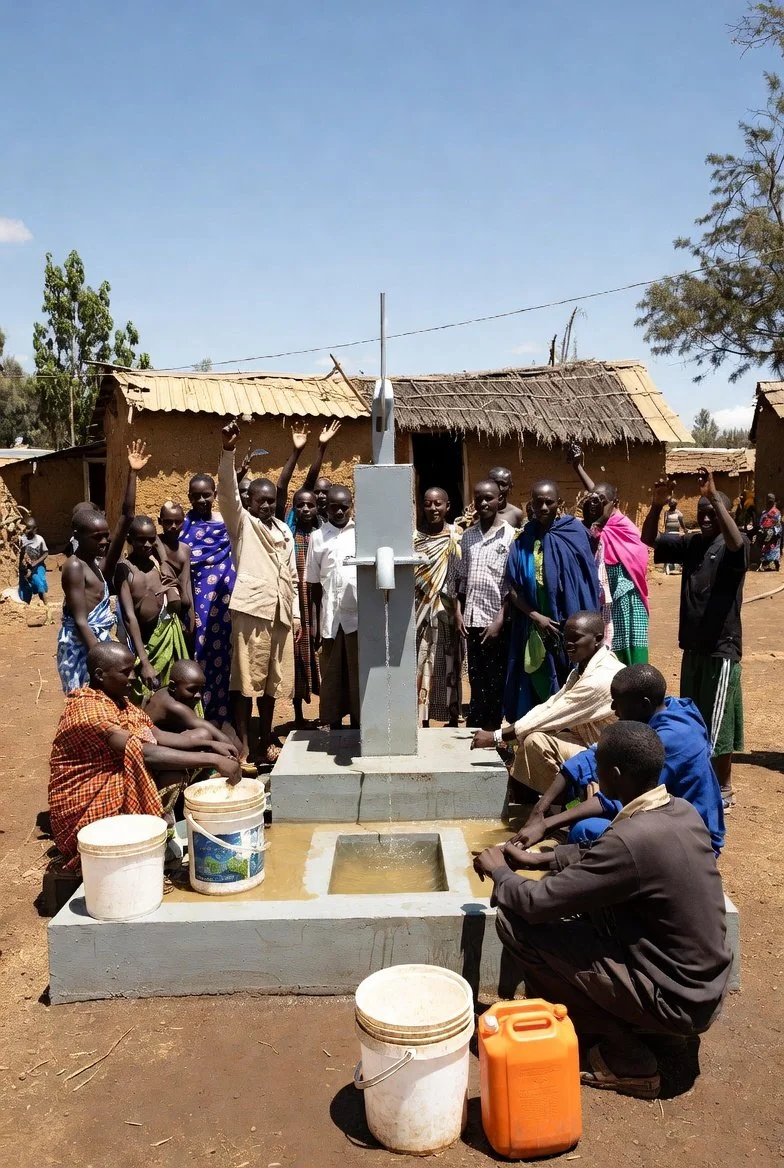
Clean Water
The problem
Families travel long distances for unsafe water, impacting health and education.
Our approach
Build safe community water systems by drilling and constructing water wells, installing hand or solar-powered pumps, and providing water storage solutions.
Protect water quality through testing for bacteria and heavy metals and installing community purification and filtration systems.
Strengthen sanitation and hygiene with handwashing stations, bathrooms, and practical hygiene education on hand-washing, safe water storage, and bathroom use.
Equip communities to sustain their water systems with maintenance training, long-term technical support, and community-led management and collaboration.
OUR INITIATIVES
About 40% of Kenya’s population still lacks access to safe drinking water. In many rural communities, families rely on shallow wells, rivers, or open ponds for their daily water needs. These sources are often far from home and frequently contaminated with bacteria and other harmful substances, putting children and adults at constant risk of waterborne disease.
The lack of safe drinking water in rural Kenya is driven by a mix of geographical distance, limited infrastructure, and economic hardship. Unlike urban areas, where piped systems are more common, rural communities often have few reliable water points—making clean water both physically difficult to reach and financially out of reach for many families.
Traditional water sources are further threatened by agricultural runoff, animal waste, and inadequate sanitation facilities. Over time, this contamination erodes health, limits school attendance, and places an extra burden on caregivers—especially women and girls, who are most often responsible for collecting water.